Planning Your Own Hydro System
Bookmark this page (Ctrl+D)
 View/Print PDF Version
Guide Navigation
Measuring the Potential
Measuring Flow
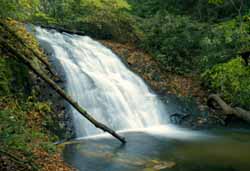
Stream levels change through the seasons, so it is important to measure FLOW at various times of the year. If this is not possible, attempt to determine various annual flows by discussing the stream with a neighbor, or finding government geological survey flow data for your stream or a nearby larger stream. Also keep in mind that fish, birds, plants and other living things rely on your stream for survival. Especially during low water seasons, avoid using all the water for your hydro system.
FLOW is typically expressed as some volume of water per second or minute. Common examples are gallons or liters per second (or minute), and cubic feet or cubic meters per second (or minute): Each can be easily converted to another, as follows:
- 1 cubic foot = 7.481 gallons
- 1 cubic meter = 35.31 cubic feet
- 1 cubic meter = 1,000 liters
There are three popular methods for measuring FLOW: using a Container, Float, or Weir. Each will be described in detail below. Once again, accuracy is important to ensure correct system design and optimum power generation.
Method 1: Measuring Time to Fill Container
The Container Fill method works only for very small systems.
Build a temporary dam that forces all the water to flow through a single outlet pipe, Using a bucket or larger container of a known volume, use a stopwatch to time how long it takes to fill the container. Then, divide the container size by the number of seconds.
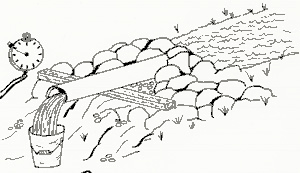
Example:
Container = 5 gallon paint bucket
Time to fill = 8 seconds
- 5 gallons / 8 seconds = 0.625 gallons per second (gps)
To convert into Cubic Feet per Second (cfs):
- 7.481 gallons per second = 1 cubic foot per second, so
- 0.625 gps / 7.481 = 0.0835 cubic feet per second (cfs).